


Emerging contaminants in wastewater: EP Group study evaluating ozonation and adsorption receives international recognition
The presence of emerging contaminants in effluents compounds the challenges faced by industries and wastewater treatment plant operators. Among these substances are Active Pharmaceutical Ingredients (APIs), which may require specific treatment pathways and an assessment that goes beyond the removal of the original compound.
To investigate this scenario, the EP Group’s Research, Development, and Innovation (PDI) team evaluated the application of ozonation combined with adsorption using powdered activated carbon. The study received international recognition at the 7th Ibero-American Congress on Advanced Oxidative Processes (CIPOA).
What Are Emerging Contaminants in Effluents?
Emerging contaminants are substances whose occurrence and potential environmental effects have received increasing attention, but which are not always specifically addressed by routine monitoring parameters. This group includes compounds of various origins and chemical characteristics, such as pharmaceutical residues, personal care products, and other micropollutants.
In the case of the pharmaceutical industry and other processes that may receive pharmaceutical waste, APIs deserve special attention. These are the substances responsible for the therapeutic effect of medications and may exhibit different behaviors during treatment, depending on the effluent matrix, concentration, compound structure, and operating conditions.
In addition to ecotoxicological effects, the study highlights antibiotic resistance as one of the concerns related to the presence of pharmaceuticals and the byproducts formed during treatment. This aspect reinforces the need to evaluate the treatment pathway in an integrated manner, rather than focusing solely on reducing the concentration of the original compound.
For this reason, a technology that is effective for a specific compound or effluent should not be automatically extrapolated to another application. Defining the treatment pathway requires characterization of the stream, treatability tests, and performance criteria compatible with the project’s objective.
Why toxicity also needs to be assessed
A reduction in the concentration of a contaminant is a relevant indicator, but it does not complete the assessment. During oxidation processes, the original molecule may be transformed into other compounds. Depending on the matrix and treatment conditions, these transformation products may maintain or alter the effects of the effluent on test organisms.
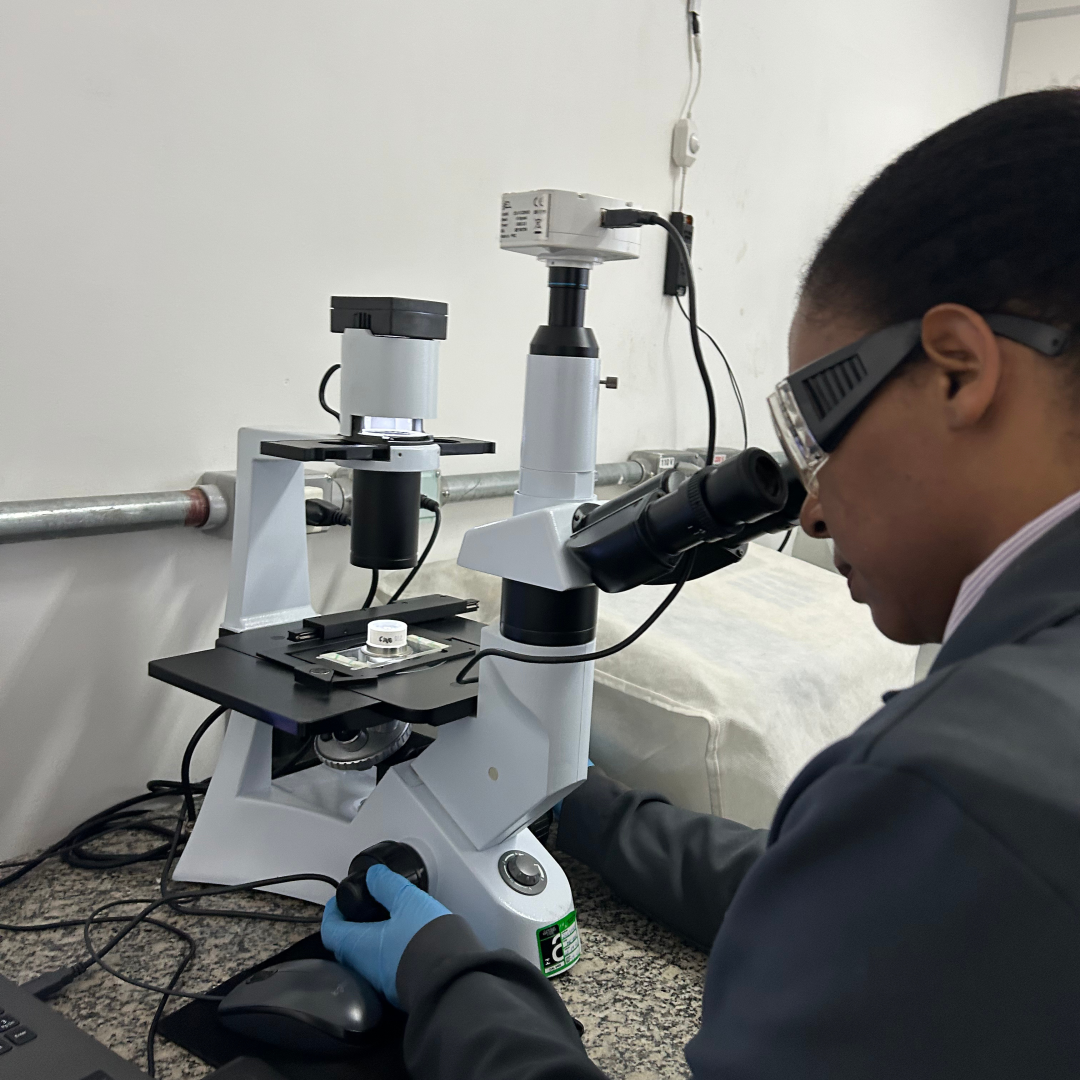
Ecotoxicological analysis complements chemical measurements by assessing the overall effect of the sample. In the EP Group’s study, the tests used the microalga Raphidocelis subcapitata and the microcrustacean Daphnia magna, organisms that represent different trophic levels. Among the indicators monitored were the Toxicity Factor (TF), the No Observed Effect Concentration (NOEC), and the median effective concentration at 48 hours (EC50-48 h).
EP Group Study Presented at the 7th CIPOA 2026
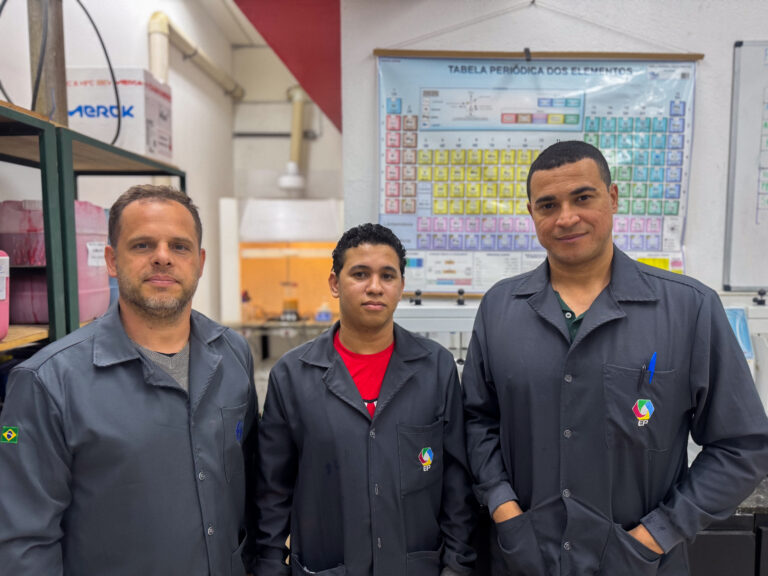
The study “Evaluation of the Ozonation Process for the Removal of Active Pharmaceutical Ingredients (APIs) and Their Toxicological Effects” was conducted by Haroldo Pereira, Rodrigo Constant, and Rafael Sousa of EP Engenharia do Processo. The study, presented as a poster, was presented at the 7th CIPOA 2026, held in Quito, Ecuador, from October 12 to 16, 2026.
The event brought together researchers, professionals, and representatives from the public and private sectors to discuss advanced oxidation technologies applied to the treatment of water, wastewater, air, and soil. Among the official topics were ozonation, emerging contaminants, and the combination of oxidative processes with adsorption.
How the study was conducted
Samples collected on four occasions at a Brazilian pharmaceutical plant were analyzed. The compounds monitored were azithromycin, ciprofloxacin, diclofenac, ketoprofen, and metamizole, in addition to Chemical Oxygen Demand (COD). Prior to ozonation and adsorption, a physicochemical pretreatment with polyaluminum chloride (PAC) was applied to reduce suspended solids and facilitate oxidation by ozone.
The raw samples showed high concentrations of APIs and COD. Among the compounds evaluated, metamizole had the highest initial concentration. The results highlighted the pharmaceutical load in the effluent prior to treatment and the need for a treatment process capable of simultaneously addressing organic matter and micropollutants.
The study compared three trials involving ozonation alone and a fourth trial that combined 548.5 mg O₃/L—a dose estimated based on COD-related demand—with adsorption on powdered activated carbon. The removal of APIs was monitored by high-performance liquid chromatography coupled with mass spectrometry (HPLC-MS). Toxicity was assessed through tests with Raphidocelis subcapitata and Daphnia magna.
Key Ecotoxicity Findings
The combination treatment yielded the most favorable toxicological responses in the study. For the organism Raphidocelis subcapitata, the FT decreased from greater than 64 in the raw sample to 1 in the final effluent, while the CENO increased from less than 1.56% to 100%. For Daphnia magna, the FT decreased from 32 to 1, and the EC50-48 h increased from less than 1.56% to more than 100%. The results indicated a significant reduction in toxicity under the combined test conditions. In contrast, tests using ozonation alone maintained higher toxicity levels, a behavior attributed to the possible formation of oxidation byproducts. The study also recorded high removal rates for most APIs. Pretreatment with PAC helped reduce suspended solids and turbidity, improving the performance of subsequent stages; however, without the oxidation step, it was not sufficient to demonstrate the removal efficiency of the final effluent.
How Ozonation and Adsorption Can Work in a Complementary Manner
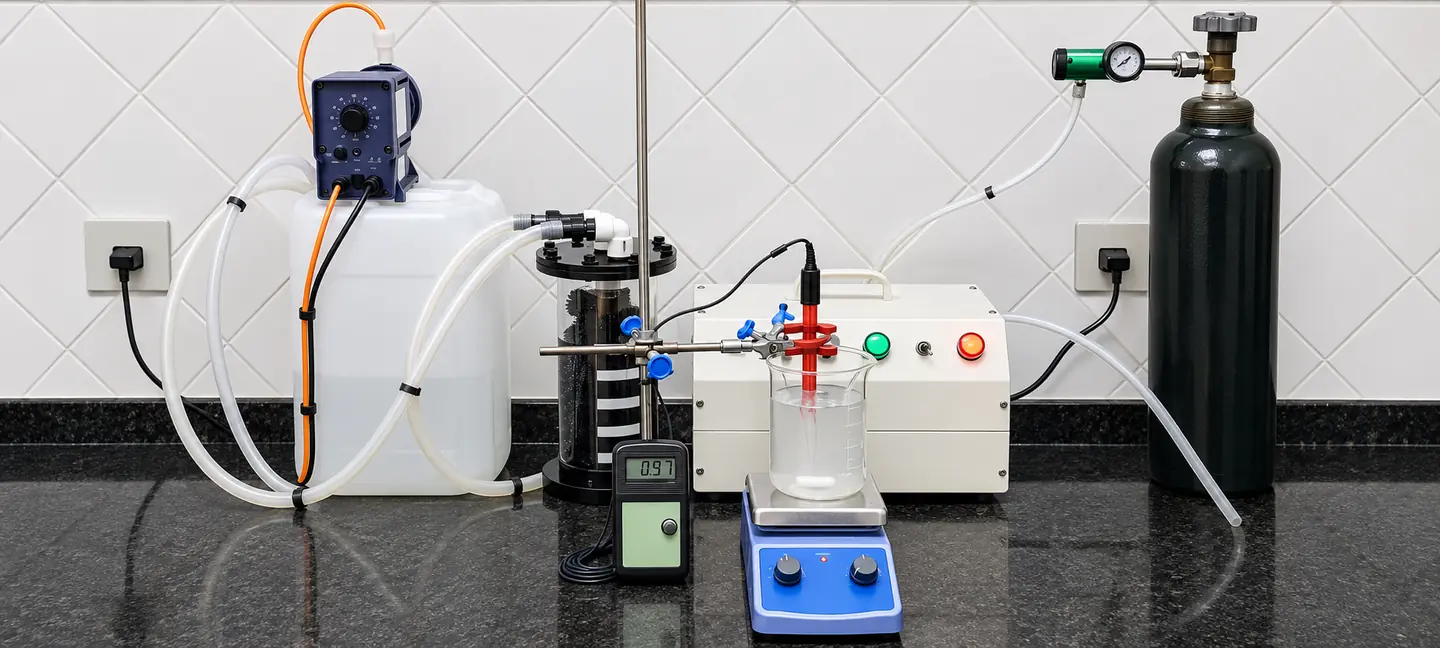
Ozone acted as an oxidizing agent and reacted with compounds present in the effluent. Efficiency depended on factors such as matrix composition, oxidant demand, applied dose, pH, contact time, and contaminant characteristics. Therefore, performance must be verified under conditions representative of actual industrial operations.
The scientific abstract emphasized that pH played an important role in the process: acidic conditions tend to be less favorable for the formation of hydroxyl radicals, while more alkaline conditions promoted the decomposition of some of the ozone and the formation of hydroxyl radicals, thereby enhancing oxidation. This does not mean that an alkaline pH is recommended for any effluent; the adjustment should be determined through bench-scale tests, pilot studies, and the evaluation of the removal of target contaminants.
Adsorption, in turn, promotes the retention of substances on the surface of an adsorbent material. In the study, powdered activated carbon (PAC) was used as a complementary step. Applied after oxidation, adsorption can act as a polishing step to remove residual compounds or byproducts resulting from the incomplete degradation of APIs.
The combination of these two technologies does not replace engineering evaluation. It expands treatment options but requires testing to determine the sequence of steps, input consumption, adsorbent capacity, waste generation, and analytical and toxicological control criteria.
What the results mean for industrial processing
The study underscored the importance of evaluating emerging contaminants using an integrated approach. In this study, ozonation alone was able to degrade pharmaceuticals, but the adsorption step was essential for minimizing residual toxicity under the conditions evaluated. For an industrial facility, selecting a technology based solely on the removal of one or more target compounds may leave gaps in the final quality of the treated effluent.
The results should not be interpreted as a universal guarantee of performance. Samples were collected from four manufacturing sites and exhibited different initial concentrations of APIs and COD. In practice, the decision should take into account the source and variability of the effluent, the compounds present, the discharge objectives, and the technical and economic feasibility of the solution.

Applied research to determine treatment regimens
The EP Group’s Research, Development, and Innovation division works to solve challenges and evaluate technologies through bench-top and pilot-scale studies. This approach allows for the comparison of scalable technological pathways prior to implementation, generating reliable data for project sizing and system operation with maximum efficiency.
Participation in the 7th CIPOA is part of this work in applied research and exchange with the international technical and scientific community.
Does your company need to assess emerging contaminants or an advanced treatment process?
Talk to the EP Group’s technical team about treatability studies, pilot tests, and technical and economic feasibility for your process.