Modular wastewater treatment plants and modular drinking water treatment plants: When do they make more sense than a conventional plant?
A modular wastewater treatment plant (WWTP ) or modular water treatment plant (WTP) can be an attractive alternative when the project requires faster implementation, the possibility of phased expansion, minimal on-site disruption, and better use of the available space. This does not mean that the modular design is the best choice for every scenario.
The decision depends on the flow rate, the quality of the raw water or the characteristics of the effluent, the treatment goals, the operational routine, and the site conditions. Before choosing the plant’s design, it is necessary to define the appropriate treatment process.
RDirect answer: A modular treatment system usually makes more sense when a company needs to reduce the amount of on-site construction work, meet a tighter schedule, or plan for a gradual increase in capacity. A conventional plant may be more suitable for large, stable flow rates, projects with specific civil engineering structures, or operations with no plans for expansion through modular additions.
What is a modular treatment system?
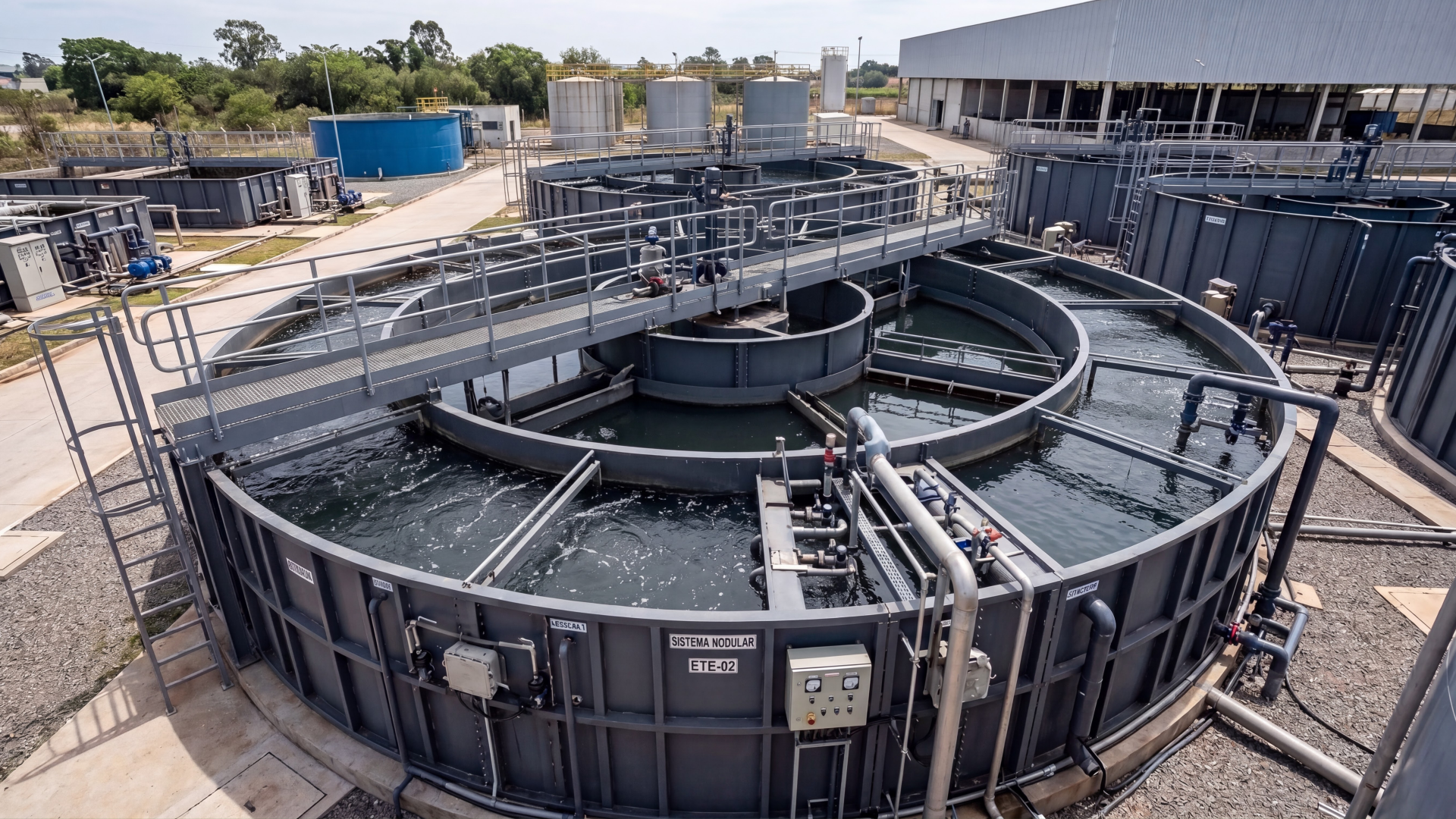
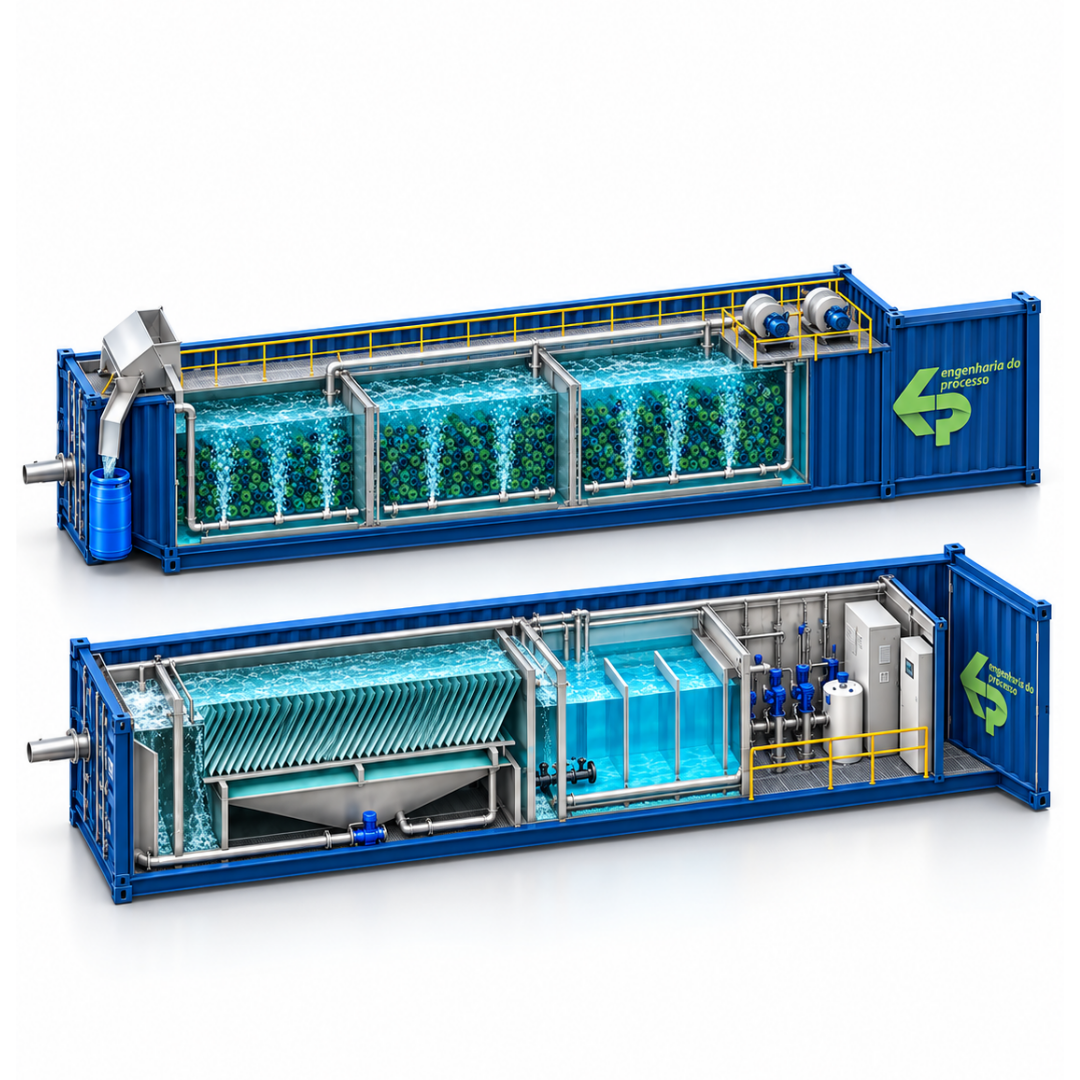
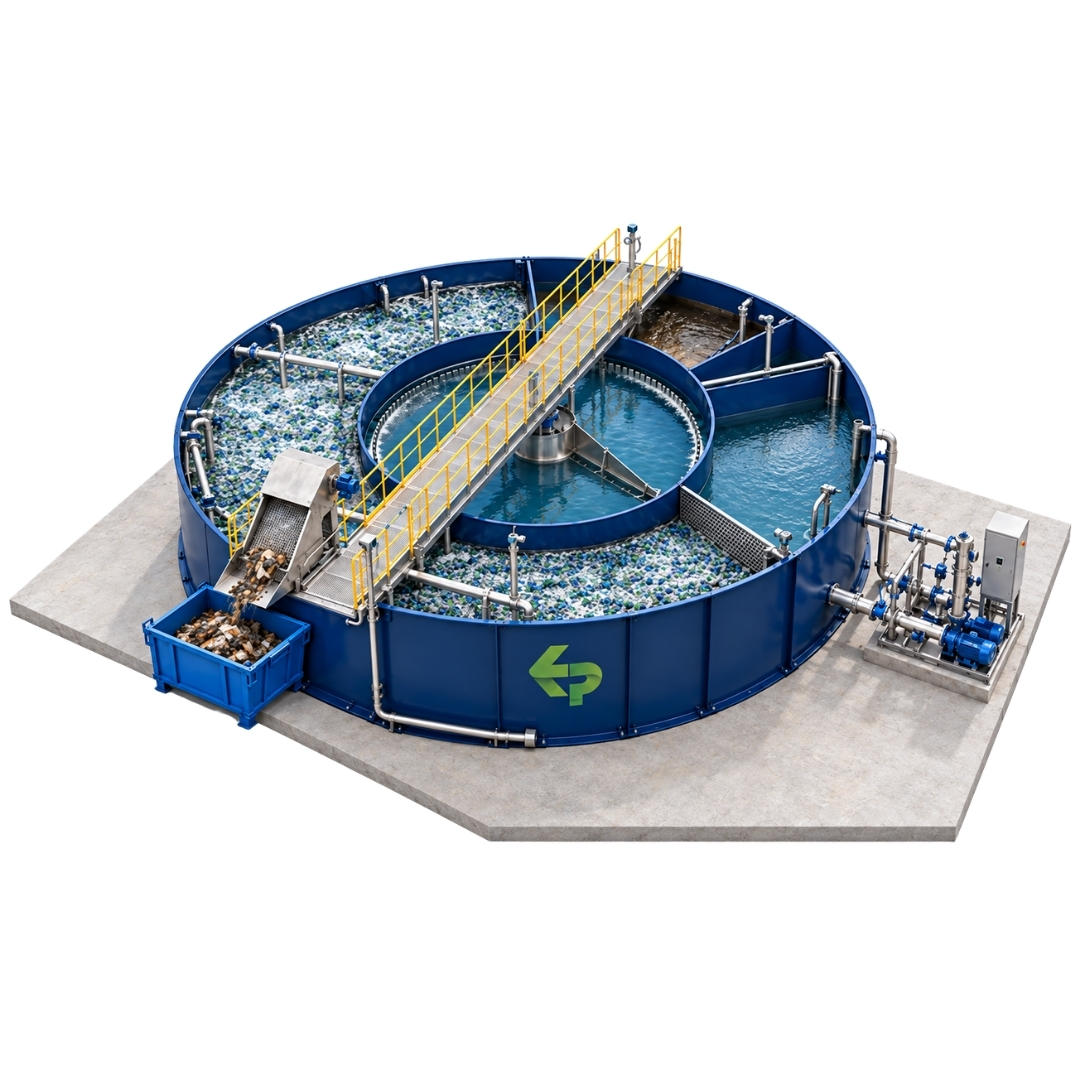
A modular treatment system is designed in units that can be manufactured and prepared prior to final on-site assembly. These modules combine stages of the treatment process and are sized according to the needs of each operation.
The concept can be applied to a modular wastewater treatment plant (WWTP), a modular water treatment plant (WTP), and complementary systems, such as water reuse, ultrafiltration, and reverse osmosis.
Modular does not necessarily mean a ready-made station that is identical for all customers. Nor is it synonymous with a system installed in a container. Depending on the flow rate, technology, and logistical conditions, the solution may use tanks and skids manufactured off-site, transported in an optimized manner, and assembled on-site.
The key feature lies in organizing the project into functional modules, with the capacity to meet current demand and, when technically feasible, accommodate new units in the future.
What problems can a modular wastewater treatment plant (WWTP) or modular water treatment plant (WTP) solve?
1. The operation needs to increase capacity in stages
Not every industrial facility or utility reaches maximum flow at the start of a project. In plant expansions, new projects, and contracts implemented in phases, building the entire capacity at once may require investments that would only be necessary later on.
A modular wastewater treatment plant (WWTP) or modular water treatment plant (WTP) allows for phased implementation. The company starts with the capacity needed for the current scenario and adds modules as demand increases, provided that this expansion is already factored into the sizing, layout, and interconnections.
This approach helps align investment with the actual growth of the operation, without losing sight of future capacity.
2. The schedule does not allow for a long-term construction project at the site
Conventional stations may require a significant amount of construction, assembly, and on-site integration. When part of the manufacturing takes place in a controlled environment, some activities can proceed simultaneously with site preparation.
This tends to reduce the number of steps performed at the plant and can shorten the implementation period. The completion date, however, remains dependent on factors such as permitting, civil works, equipment availability, access, utilities, and the complexity of the treatment process.
For operations with a critical start date, this reduction in on-site activities can be decisive.
3. There is little space available for the station
Limited space is a common challenge in existing plants, especially when the facility has grown around the environmental infrastructure. A modular layout can facilitate equipment organization and space utilization, but it does not eliminate the physical requirements of the process.
A biological treatment stage, for example, still requires sufficient volume to meet retention time requirements and achieve expected performance. Therefore, a well-designed modular solution aims for a more efficient layout without compromising essential structures just to make the plant fit within the available space.
4. The logistics involved in getting there are complex
Projects in remote regions, areas with restricted access, or job sites with limited infrastructure may incur high transportation and assembly costs. In such cases, the design of the modules must be considered in conjunction with the logistics route.
Modules that can be disassembled or transported in a stacked configuration, pre-assembled skids, and pre-planned interconnections can reduce the number of special cargo shipments and facilitate on-site assembly. The choice between modules, containers, and conventional structures should take into account dimensions, weight, distance, and site access.
5. The implementation must not compromise the existing system
When a wastewater treatment plant (WWTP) or water treatment plant (WTP) is already in operation, any expansion must take into account the risk of downtime. New modules can be manufactured and prepared separately, with connection to the existing system during a planned window.
This minimizes disruption during part of the project and can support expansions or upgrades with less operational impact. Nevertheless, treatment continuity depends on a specific plan for bypasses, interconnections, testing, and commissioning.
6. Future demand remains uncertain
Some operations are subject to gradual growth, seasonality, or anticipated changes in the production process. A modular system can offer greater flexibility for future adjustments, provided that the core infrastructure has been designed to accommodate them.
Expansion isn’t just a matter of installing another tank. Pumps, piping, control panels, automation, sludge treatment, available space, and hydraulic capacity must also be able to accommodate the new phase.



 Booth I03
 October 20–22, 2026
 1:00 p.m. to 8:00 p.m.
 Expo Center Norte, São Paulo