


Paraquat and Pesticides Banned in Water: The Importance of Monitoring for Sanitation
Monitoring pesticides in water helps water utilities and municipal sanitation services track the quality of water sources and the water supplied to the public.
A journalistic investigation published in November 2026 identified records of banned pesticides detected in the water of 790 Brazilian municipalitiesbetween 2023 and 2026, based on data from the Water Quality Surveillance Information System for Human Consumption (Sisagua). Paraquat was found in 28% of the 2,068 municipalities that tested for the substance. Source: Repórter Brasil.
However, one distinction is important: Detecting a substance does not, in and of itself, mean that its concentration is above the applicable limit. The interpretation depends on the matrix, the sampling point, and the result obtained.

Why monitor pesticides in water?
Banning an active ingredient does not automatically eliminate the need to monitor it. For example, its presence may be related to various factors, such as past uses, remaining stockpiles, improper use, or transport in the environment. A single detection, however, does not prove the substance’s origin.
Among the compounds mentioned in the investigation are paraquat, aldicarb, carbendazim, carbofuran, and methamidophos. In this regard, to assess the context of each system, it is useful to compile the history of results, the characteristics of the water source, and available information on the use and land use of the watershed.
What should be considered in drinking water regulations?
The GM/MS Ordinance No. 888/2021, which updated the federal drinking water standards, includes parameters for monitoring pesticides. To define the testing plan, the team in charge must consult current legislation and verify any applicable state and local requirements.
In addition, in some cases, the parameter takes into account a group of substances. For aldicarb, for example, aldicarb sulfone and aldicarb sulfoxide—metabolites of aldicarb—are also taken into account. Methamidophos and acephate are also grouped together in a parameter of the standard.
Raw water and water intended for human consumption have different monitoring objectives. Therefore, they should not automatically be compared using the same criteria.
How should we organize the testing for pesticides in water?
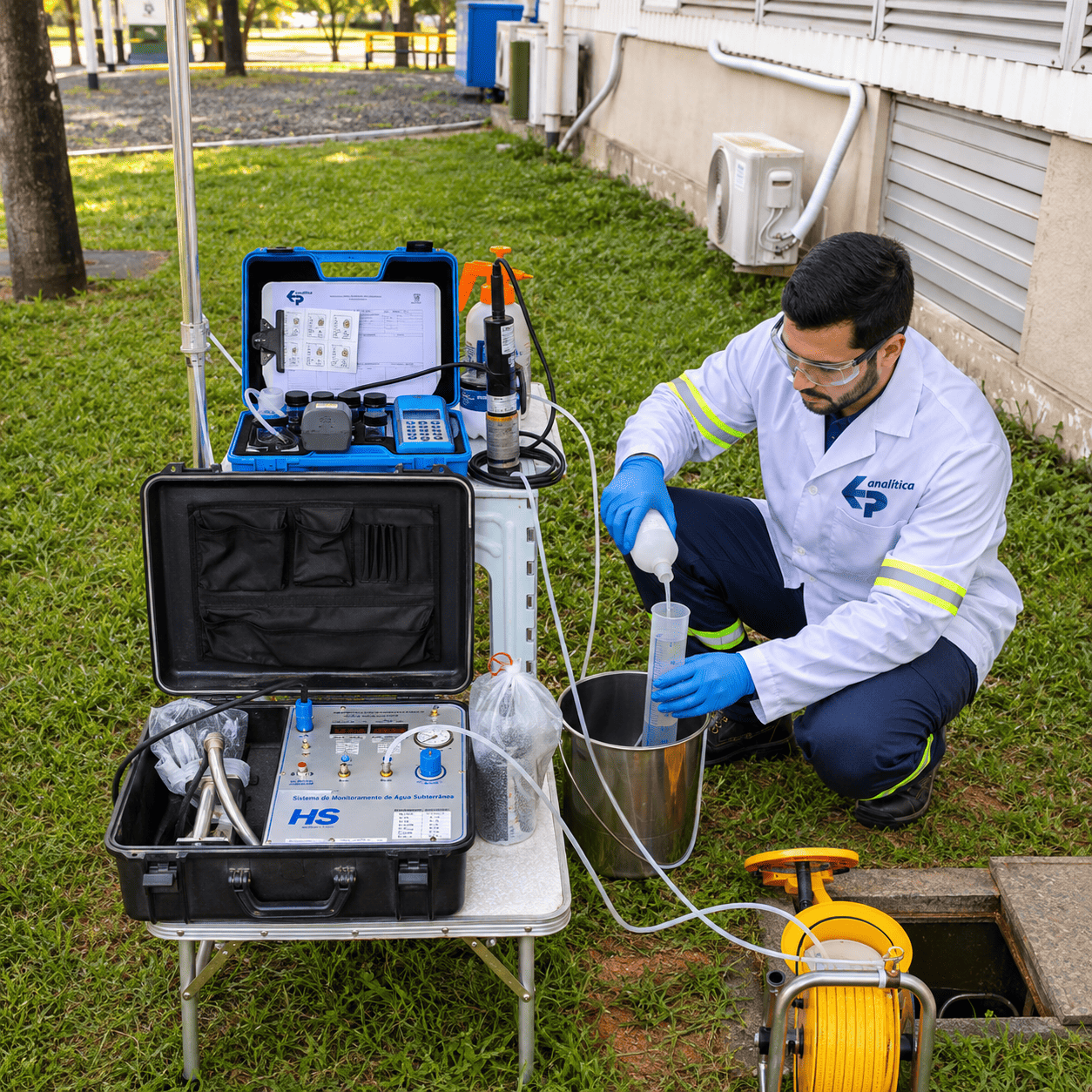
First, planning begins with defining the collection sites, the samples, and the parameters required for each objective. Next, when preparing the campaign and the quote, be sure to inform the laboratory:
- Sampling points and identification of raw or treated water.
- Requested parameters, including associated substances where applicable.
- Number of samples and frequency of sampling campaigns.
- Requirement for the laboratory to collect samples.
- Limits of quantification, deadlines, and accreditation requirements.
In addition, before collection, confirm the appropriate vials, storage conditions, transportation, and time limits for each assay. These conditions vary depending on the method, the compound, and the matrix.
A EP Analítica collects environmental samples and coordinates laboratory logistics in accordance with the requirements of the request.
How do you choose a laboratory to test for pesticides in water?
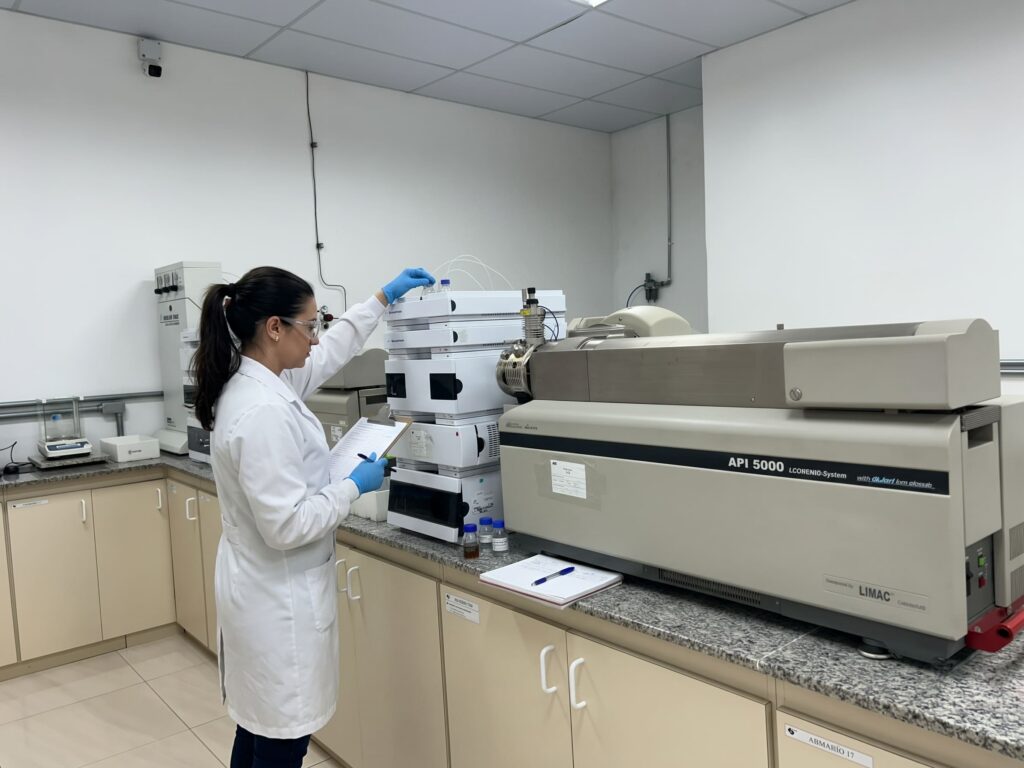
Liquid chromatography coupled with tandem mass spectrometry, known as LC-MS/MS, is one of the techniques used to analyze pesticides in water. However, the choice of method depends on the compound, the matrix, and the detection limit required for the intended use of the results.
In addition, when accreditation is required, confirm that the requested tests, matrices, and sampling activities are covered by the current scope of accreditation. This is because a laboratory’s accreditation does not mean that all of its services are accredited. This information can be obtained through the Inmetro’s Brazilian Network of Testing Laboratories.
Environmental Assessments for Sanitation
A EP Analítica, the environmental analysis division of the EP Group, supports sanitation operations with collection and laboratory analysis services.
The EP Analítica laboratory has an analytical scope capable of quantifying dozens of active ingredients, ranging from persistent organochlorines to polar herbicides currently in use, employing GC-MS and LC-MS/MS techniques to fully comply with the standards set forth in GM/MS Ordinance 888, CONAMA 357, and CONAMA 420.
Finally, to request a quote for pesticide monitoring, please provide the parameters, matrices, and available sampling points. This will allow our team to assess your needs and confirm the applicable methods, limits of quantification, and accreditation requirements.