




The water potability report is an essential document to guarantee that the water consumed is within the standards required by Brazilian legislation. With the advance of urbanization and the increase in population density, the definition of strict quality criteria has become indispensable in order to protect public health and prevent waterborne diseases.
Since water is an essential and limited natural resource, used as the basis for food, cultivation and other production processes, continuous monitoring and the issuing of a reliable reliable water potability report are fundamental to ensuring its quality.
How did the standards for monitoring water quality come about?
The regulation of water quality in Brazil has evolved over the decades. The initial milestone occurred in 1977, with the Federal Decree No. 79.367/1977which gave the Ministry of Health responsibility for establishing drinking water standards.
Since then, several updates have been made, including:
- Ordinance No. 56/1977 – first potability criteria
- Ordinance No. 36/1990 – expansion of parameters
- Ordinance GM/MS No. 888/2021 – current legislation
Ordinance No. 888/2021 brought significant advances, making the water potability report even more complete and rigorous.
The importance of Ordinance GM/MS No. 888
Ordinance No. 888 of 2021 is extremely important because it lists new parameters and emerging contaminants for analysis, adjusts the Maximum Permitted Limits (MPLs) for various substances based on updated international references, and expands monitoring requirements and the frequency of sample collection.
In addition, Ordinance GM/MS No. 888 defines responsibilities for supply systems and encourages the use of advanced analysis technologies and the creation of Water Safety Plans (WSPs).
The Ordinance provides for more than 100 chemical substances to be monitored in their entirety, including assessments associated with microbiological, organic, physical-chemical, radiological and emerging contaminant risks.
Main updates to Ordinance 888/2021
The new ordinance has brought important changes that directly impact the preparation of the water potability report:
1. inclusion of new contaminants
Emerging contaminants were added, such as:
- Pesticides
- Industrial compounds
- Cyanotoxins
- Disinfection by-products
2. Review of Maximum Permitted Limits (MPLs)
Some parameters have had their limits adjusted based on international references, making control more rigorous.
3. New sampling requirements
The frequency of collection was increased, requiring greater operational control and data traceability.
4. Water Safety Plans (WSP)
The ordinance encourages the implementation of PSAs, promoting a preventive approach to quality management.
5. Control of materials and products
It now requires certifications (ABNT and INMETRO) for inputs used in water treatment.
Who must follow Ordinance 888/2021:
O water potability report is mandatory for different types of systems and operations, including:
- Collective supply systems
- Collective alternative solutions (SACs)
- Individual alternative solutions (IAS)
- Water trucks for human consumption
- Industries and companies with their own water consumption
The inspection is carried out by the municipal health inspectorate, which requires proof of water quality through up-to-date reports.
How to choose the ideal laboratory for a water potability report?
The choice of laboratory is a critical factor in ensuring the validity and reliability of the water potability report.
Essential criteria:
- ISO/IEC 17025 accreditation
- Recognition by CGCRE/INMETRO
- Analytical scope compatible with Ordinance 888/2021
- Use of recognized methodologies (EPA, SMWW)
- Ability to meet all the required parameters
It should be noted that there is no single accreditation for all tests. The laboratory must be accredited individually for each method.
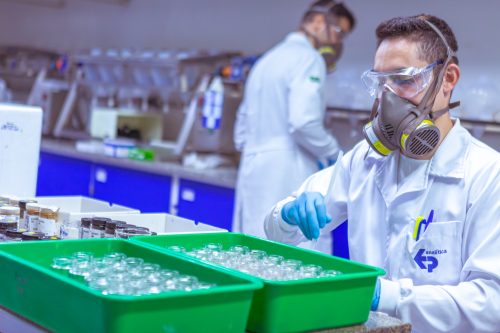
EP Analytical: reference in water potability reports
A EP Analítica is the EP Group laboratory that stands out in the market precisely because it meets these criteria in an integrated way, offering technical and operational safety at every stage of the process, from collection to issuing the water potability report.
In April 2025, we began to meet 100% of the parameters of Ordinance GM/MS No. 888/2021a strategic differential that guarantees:
- Greater quality control
- Agile delivery of results
- Reducing outsourcing
- High technical reliability
Our laboratory is accredited by CGCRE/INMETRO (CRL 0361) and uses internationally recognized methodologies, including:
- SMWW (Standard Methods for the Examination of Water and Wastewater)
- EPA (Environmental Protection Agency)
Request your water potability report now with EP Analítica and get reliable, complete results that are recognized by the regulatory bodies.