



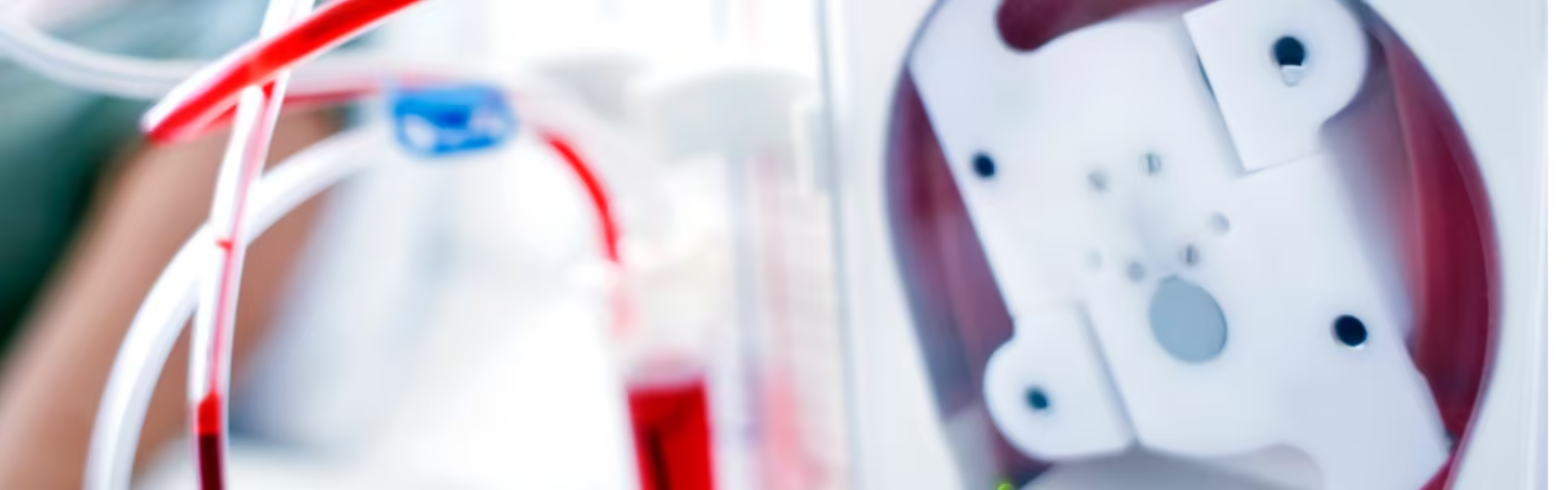
The quality of the water used in hemodialysis is a critical factor for patient safety and treatment effectiveness. Unlike other applications, water for hemodialysis comes into direct contact with the bloodstream, albeit indirectly, requiring extremely strict standards of treatment, control and monitoring.
In this article, you will understand how hemodialysis works, why water needs to be ultrapurified, what the treatment stages are, the legal requirements in Brazil and the importance of continuous monitoring of water quality.
What is hemodialysis and why is water so important?
The kidneys are responsible for essential functions in the body, such as eliminating metabolic waste, controlling water and electrolyte balance and maintaining acid-base balance. When kidney function is compromised, whether acutely or chronically, dialysis is indicated as a means of preventing kidney disease. renal replacement therapy.
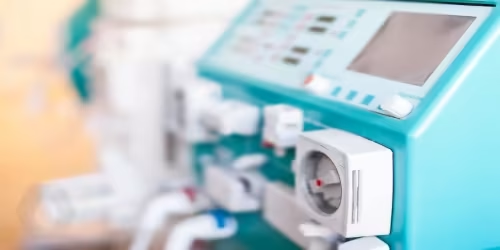
Hemodialysis is a method in which the patient’s blood is pumped into a machine that filters it through a semi-permeable membrane. In this process, excess substances in the blood, such as urea, creatinine, potassium, sodium and other metabolic waste products, are removed.
For this exchange to take place safely, a liquid called dialysateThis water is based on ultra-purified water. Any fault in the quality of this water can result in serious consequences for the patient.
What is dialysate?
Dialysate is the solution used during a hemodialysis session and its function is to allow the exchange of substances between the blood and the external environment. It consists of:
- Ultra-purified water
- Salts and electrolytes (sodium, potassium, calcium, magnesium and chloride)
- Bicarbonate
- Glucose
These components are adjusted to specific concentrations for each patient, ensuring the right balance during treatment. On average, each hemodialysis session consumes around 120 liters of treated waterwhich underlines the importance of strict quality control.
Stages of water treatment for hemodialysis
The water used in hemodialysis services generally comes from the public network or underground wells. However, this water does not naturally meet the standards required for use in dialysis, and a specific treatment system is needed.
1. Water pre-treatment
The aim of pre-treatment is to remove contaminants that could compromise patient safety and damage subsequent treatment systems, such as reverse osmosis.
The main steps include:
Deionizers
Responsible for removing salts and particles in suspension, protecting the membranes of the reverse osmosis system.
They use resins with an affinity for calcium and magnesium, removing the hardness from the water and replacing these ions with sodium, which is then eliminated in reverse osmosis.
Essential for removing chlorine, chloramines and organic compounds. Strict control of these filters is essential, as activated carbon can encourage bacterial proliferation if not properly maintained.
The presence of chlorine or chloramines in the dialysate can cause hemolysisa serious condition characterized by the destruction of red blood cells.
2. Reverse osmosis
After pre-treatment, the water goes to the reverse osmosisconsidered the heart of water treatment for hemodialysis.
In this process, a pressure higher than the osmotic pressure is applied, forcing the water through a semi-permeable membrane. This membrane is capable of retaining more than 95% of chemical and microbiological contaminantsincluding heavy metals, bacteria and endotoxins.
3. Ultraviolet disinfection
As a final step, the water goes through an ultraviolet light disinfection system, further reducing the microbiological risk before being stored and distributed to the points of use.
Storage and distribution of treated water
After treatment, the water is stored in tanks designed to preserve its quality. These tanks must
- Made from compatible materials
- Conical bottom
- Allow proper cleaning and disinfection
- Does not interfere with the physical-chemical and microbiological quality of the water
The entire storage and distribution system must meet the requirements of RDC no. 11/2014ensuring that the water maintains its quality right up to the point of use.
Monitoring the quality of hemodialysis water
Even with an efficient treatment system, constant constant monitoring is indispensable. Natural wear and tear of the equipment, membrane saturation and operational failures can compromise the efficiency of the system.
In Brazil, the quality control of water for hemodialysis is mainly regulated by the following standards:
- RDC no. 154/2004
- RDC no. 11/2014
These laws establish strict limits for chemical and microbiological contaminants, as well as a minimum frequency of analysis.
Main parameters monitored
Among the most critical parameters are:
- Total coliforms
- Heterotrophic bacteria count
- Endotoxins
- Heavy metals (aluminum, lead, cadmium, mercury, among others)
- Ions such as calcium, magnesium, sodium, potassium and sulphate
- Chlorine, chloramine and fluoride
Failure to comply with these limits can cause serious adverse reactions, such as:
- Pyrogenic reactions
- Hemolytic anemia
- Encephalopathies
- Neuromuscular disorders
- Hard water syndrome
A EP Analítica acts as a technical partner for hemodialysis servicesservices, carrying out chemical and microbiological laboratory analyses with high technical rigor, ensuring that the water used complies with the standards required by current legislation.
The importance of control: a warning from history
A 1996 Hemodialysis Tragedy in PernambucoThis is a tragic milestone that reinforces the need for strict control of the water used in this type of treatment. At the time, more than 60 patients died after being exposed to water contaminated by toxins (microcystin-LR), which were not properly removed by the treatment system.
This episode shows that failures in water treatment and monitoring can have fatal consequences.
Conclusion
The water used in hemodialysis must meet the highest quality standards, as any contamination poses a direct risk to the patient’s life. Brazilian legislation is continually evolving to keep pace with scientific advances and guarantee greater safety in treatment.
In this context, proper water treatment and systematic monitoring of physical-chemical and microbiological parameters are not just legal requirements, but a technical and ethical responsibility.
A EP Analítica operates with a focus on technical excellence, offering chemical and microbiological analysis for hemodialysis water with up-to-date methods, high-performance equipment and full compliance with current legislation.
Our team is prepared to support health services in the rigorous control of water quality, contributing to patient safety and treatment reliability.
EP Analítica services on hemodialysis water
Our laboratory is ABNT NBR ISO/IEC 17025 accreditedThis ensures that all processes and analyses are carried out with technical rigor and proven reliability. We have highly qualified and trained professionals, as well as state-of-the-art methods and equipment, enabling us to generate consistent and accurate results. With this accreditation, we ensure compliance with current legislation on the quality of water for hemodialysis, offering our clients the confidence that they are receiving services of excellence and total safety for the treatment of their patients.
References
Water for Dialysis. Available at: <https://cdn1.redemc.net/campus/wp-content/uploads/2016/11/M6-Latini-Agua-para-Di%C3%A1lisis-PT-PUBL.pdf>. Accessed on: 29 Jan. 2025.
Available at: <https://www.webfipa.net/facfipa/ner/sumarios/cuidarte/2020v2/p.181-187.pdf>. Accessed on: 30 Jan. 2025.
“Hemodialysis tragedy” that left almost 60 dead turns 20. Available at: <https://g1.globo.com/pe/caruaru-regiao/noticia/2016/02/tragedia-da-hemodialise-que-deixou-quase-60-mortos-completa-20-anos.html>. Accessed on: 30 Jan. 2025.
Ministry of Health. Available at: <https://bvsms.saude.gov.br/bvs/saudelegis/anvisa/2004/rdc0154_15_06_2004_rep.html>. Accessed on: 30 Jan. 2025.
Available at: <https://bvsms.saude.gov.br/bvs/saudelegis/anvisa/2014/rdc0011_13_03_2014.pdf>. Accessed on: 30 Jan. 2025b.
Understanding dialysis. Available at: <https://www.freseniusmedicalcare.com.br/pt-br/pacientes-e-familias/entendendo-a-dialise>. Accessed on: 30 Jan. 2025.
MANUAIS, M. S. D. Renal failure: Dialysis. , May 2, 2019. Available at: <https://www.msdmanuals.com/pt/casa/dist%C3%BArbios-renais-e-urin%C3%A1rios/di%C3%A1lise/di%C3%A1lise>. Accessed on: 30 Jan. 2025
WATER QUALITY IN THE DIALYSIS PROCESS. Available at: <https://revistaft.com.br/qualidade-da-agua-no-processo-de-dialise/>. Accessed on: 30 Jan. 2025.
SANTOS, M. V. Hemodialysis summary: physiological principles and more! Available at: <https://med.estrategia.com/portal/conteudos-gratis/doencas/resumo-sobre-hemodialise-equipamento-principios-fisiologicos-e-mais/>. Accessed on: 30 Jan. 2025.