


A radioatividade está presente no nosso cotidiano, sendo provenientes de fontes naturais ou artificiais, e assim, estamos sendo constantemente expostos à ela. Dessa forma, afim de garantir a proteção da saúde humana, diversas normas e legislações vêm sendo implementadas com o objetivo de controlar e monitorar a radiação alfa total e beta total em água de consumo humano.
O maior exemplo disto é a Portaria GM/MS 888, legislação brasileira atualmente em vigor que define limites, metodologias e diretrizes que asseguram o monitoramento adequado dos radionuclídeos em água de consumo humano.
A EP Analítica possui escopo completo para atendimento integral à Portaria 888, incluindo análises de Alfa Total, Beta Total e radionuclídeos específicos, oferecendo segurança, precisão e conformidade.
O que é radioatividade e por que ela pode estar presente na água?
A radioatividade foi descoberta em 1896 por Henri Becquerel e aprofundada por Marie e Pierre Curie, revelando compostos como tório, polônio e rádio — todos emissores de radiação. Radionuclídeos naturais ou artificiais podem chegar à água por diferentes vias, como:
- infiltração de materiais radioativos naturais do solo;
- processos industriais;
- atividades médicas e militares;
- deposição atmosférica.
Por isso, a análise de radioatividade torna-se indispensável para identificar níveis de Alfa e Beta Total e garantir que a água esteja dentro dos padrões de potabilidade.
Tipos de radiação: Alfa, Beta e Gama
Para compreender a importância do monitoramento, é necessário entender como a radiação age:
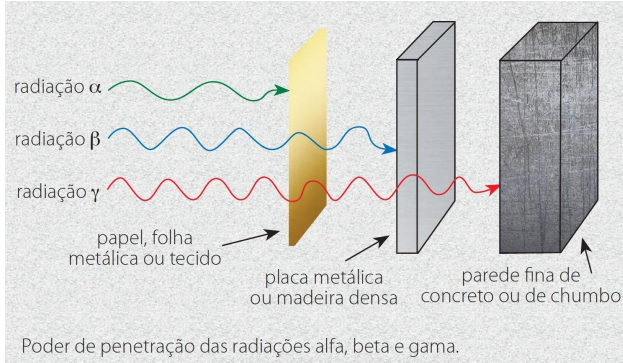
Radiação Alfa (α)
- Formada por 2 prótons e 2 nêutrons.
- Baixa capacidade de penetração — pode ser bloqueada por papel —, mas é altamente ionizante.
Radiação Beta (β)
- Carga negativa, composta por elétrons.
- Atravessa até 2 cm de tecido vivo, podendo causar danos mais intensos.
Radiação Gama (γ)
- Ondas eletromagnéticas de altíssima energia.
- Grande poder de penetração e maior risco à saúde.
A exposição pode ocorrer por:
- irradiação (sem contato direto com o material radioativo)
- contaminação interna ou externa (quando há contato, ingestão ou inalação)
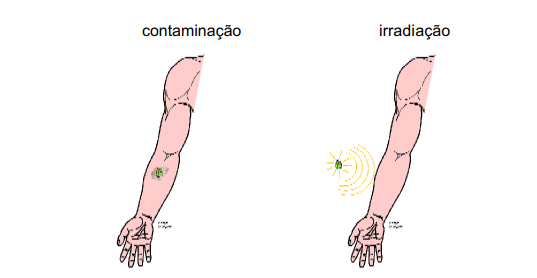
Por isso, legislações de potabilidade incorporam limites rígidos para evitar danos à saúde humana.
Fontes de exposição radioativa
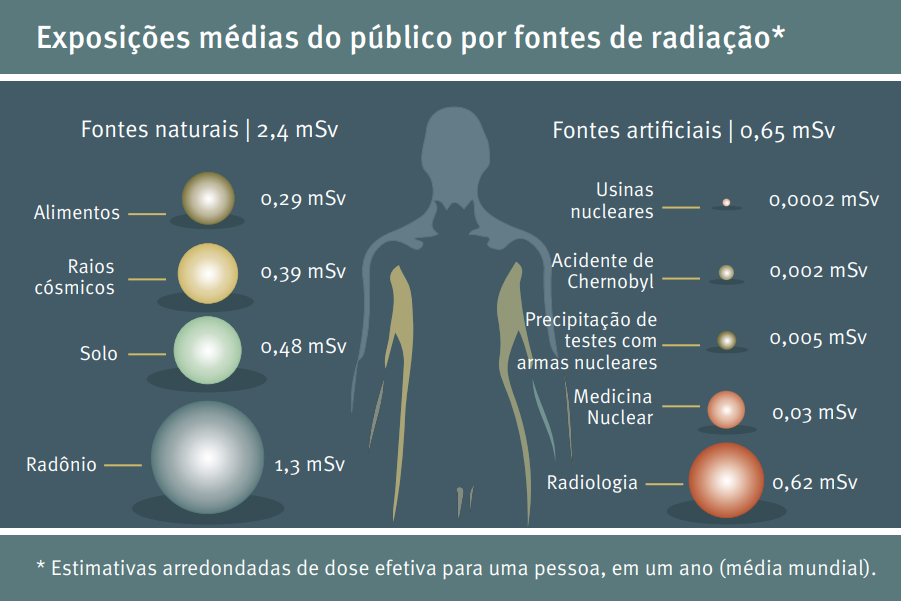
A população está exposta à radiação todos os dias, sendo aproximadamente 80% de exposição à radiação provenientes de fontes naturais e, em torno de 20% de fontes consideradas artificiais.
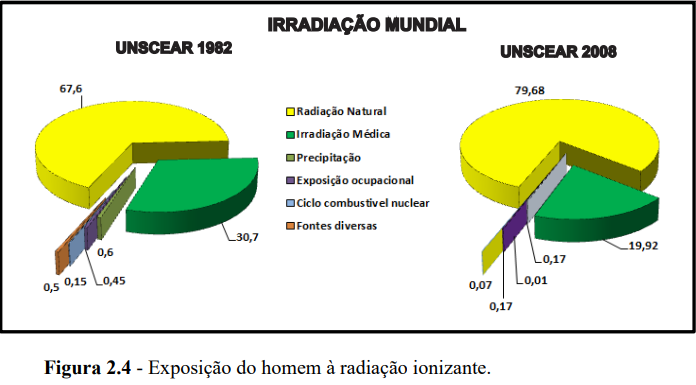
As fontes de radiação natural são aquelas provenientes do solo, da água/alimentos, Radônio e da radiação cósmica (provenientes de várias regiões do Espaço). A radiação artificial, por sua vez, são provenientes de usos em ramos como: militares (como no uso de armas nucleares); medicinais (no uso de diagnósticos por imagem e tratamento de determinadas doenças com doses controladas de radiação); e domésticos (como no caso dos detectores de fumaça).
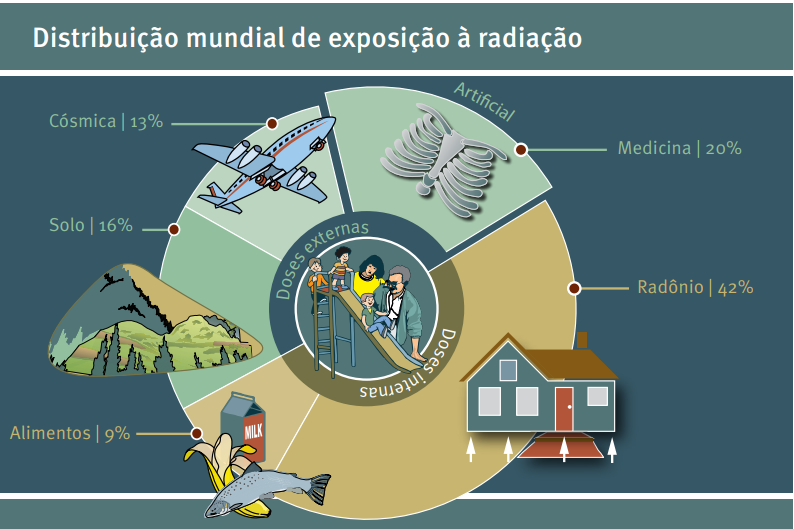
Embora a maior parte seja natural, a ingestão de água contaminada por radionuclídeos pode levar a riscos como:
- danos no DNA;
- mutações genéticas;
- tumores e leucemias;
- síndrome aguda da radiação, em doses elevadas.
Daí a importância da análise de radioatividade como ferramenta preventiva e obrigatória.
Evolução da legislação sobre radioatividade na água
Você sabia que o Brasil monitora a radioatividade na água desde 1977? Na época o valor-limite de referência para parâmetros de radioatividade alfa total e beta total, sendo eles de 0,1 Bq/L para Alfa Total e 1,0 Bq/L para Beta Total.
Esses limites permaneceram os mesmos até 2010, Caso os valores fossem superados, devia-se realizar a identificação e quantificação dos radionuclídeos (espécies químicas emissoras de radiação) e seus valores comparados com os limites estabelecidos pela Comissão Nacional de Energia Nuclear (CNEN).
Em dezembro de 2011, foi decretada a Portaria Nº 2.914, tendo alterações no valor-limite de referência para água de consumo humano, sendo de 0,5 Bq/L para Alfa Total e 1,0 Bq/L para Beta Total. Caso os limites fossem superados, devia-se determinar a concentração de radionuclídeos específicos, sendo eles Rádio-226 e Rádio-228.
Em 2021, foi publicada a portaria GM/MS 888, com novas tratativas para quantificação de Alfa Total e Beta Total em água de consumo humano. Não houve modificações no valor-limite de referência, porém as tratativas caso o limite fosse ultrapassado sofreram algumas modificações. Assim, caso o limite de Beta Total seja ultrapassado, deve-se quantificar os níveis do radionuclídeo K-40 (Isótopo do átomo potássio de massa 40u) e o valor dele deve ser descontado do valor total de radioatividade Beta total.
Se o valor permanecer acima do limite, outra amostra deve ser coletada e analisada, caso os valores continuem acima do limite, a POSIÇÃO REGULATÓRIA 3.01/012:2020 da CNEN deve ser consultada para tomada de providências. A partir desse momento, a CNEN passa a ser responsável pela análise da potabilidade no quesito radiológico.
A Portaria 888 é hoje a base para qualquer análise de radioatividade aplicada à potabilidade da água no Brasil.
A importância da análise de radioatividade para garantir água segura
A presença de radionuclídeos na água, mesmo em baixas concentrações, representa risco cumulativo para a saúde humana. Por isso, a análise de Alfa Total, Beta Total e radionuclídeos específicos é parte fundamental do controle de qualidade da água para consumo humano.
Além disso, empresas de saneamento, indústrias, prefeituras e outros laboratórios precisam cumprir a Portaria GM/MS 888 e somente laboratórios com escopo técnico validado podem emitir resultados aceitos pelos órgãos reguladores.
Análise de radioatividade com EP Analítica
A EP Analítica possui excelência em análise de radioatividade, oferecendo precisão, conformidade regulatória e capacidade técnica para atender integralmente à Portaria GM/MS 888.
Trabalhamos com métodos atualizados (CNEN, ABNT e normas internacionais), equipamentos de alta sensibilidade e uma equipe especializada preparada para análises radiológicas de alta complexidade.
A EP Analítica possui:
- Escopo completo para Alfa Total e Beta Total
- Resultados com rastreabilidade e segurança metrológica
- Estudos personalizados sob demanda
- Parcerias técnicas com outros laboratórios que precisam terceirizar análises de radioatividade
Atendemos indústrias, concessionárias, consultorias ambientais, órgãos reguladores e também laboratórios que buscam ampliar seu escopo. Seja para projetos ambientais, potabilidade ou investigações específicas, a EP Analítica é o parceiro confiável para todas as necessidades envolvendo análise de radioatividade.
Artigo por Catharina Mariusso e Leonardo Paiva
Bibliografia
Ministério da Saúde. Disponível em: <https://bvsms.saude.gov.br/bvs/saudelegis/gm/2021/prt0888_07_05_2021.html>. Acesso em: 23 dez. 2024.
Disponível em: <https://www.if.ufrgs.br/tex/fis01001/radio.pdf>. Acesso em: 23 dez. 2024.
RADIAÇÃO - EFEITOS E FONTES. Disponível em: <https://www.aben.com.br/Arquivos/544/544.pdf>. Acesso em: 23 dez. 2024.
Disponível em: <https://www.ufrgs.br/colegiodeaplicacao/wp-content/uploads/2020/06/RADIOATIVIDADE-%E2%80%93-2%C2%AA-PARTE1_removed.pdf>. Acesso em: 20 dez. 2024a.
NÍVEIS DE INVESTIGAÇÃO E DE REFERÊNCIA PARA RADIOATIVIDADE EM ÁGUA POTÁVEL. Disponível em: <https://www.gov.br/cnen/pt-br/acesso-rapido/normas/grupo-3/grupo3-pr301_12.pdf>. Acesso em: 26 dez. 2024.
Disponível em: <https://www.gov.br/cnen/pt-br/acesso-rapido/normas/grupo-3/grupo3-nrm301.pdf>. Acesso em: 26 dez. 2024c.
Disponível em: <https://www.gov.br/ird/pt-br/central-de-conteudo/publicacoes/RadioatividadeemAguaPotavel.pdf>. Acesso em: 26 dez. 2024d.
Radiação. Disponível em: <https://fiocruz.br/biosseguranca/Bis/virtual%20tour/hipertextos/up1/radiacao.html>. Acesso em: 26 dez. 2024.
BUSHBERG, J. T. Exposição e contaminação radioativa. Disponível em: <https://www.msdmanuals.com/pt/profissional/les%C3%B5es-intoxica%C3%A7%C3%A3o/exposi%C3%A7%C3%A3o-e-contamina%C3%A7%C3%A3o-radioativa/exposi%C3%A7%C3%A3o-e-contamina%C3%A7%C3%A3o-radioativa>. Acesso em: 26 dez. 2024.
Ministério da Saúde. Disponível em: <https://bvsms.saude.gov.br/bvs/saudelegis/gm/2011/prt2914_12_12_2011.html>. Acesso em: 26 dez. 2024b.
D79367. Disponível em: <https://www.planalto.gov.br/ccivil_03/decreto/1970-1979/d79367.htm>. Acesso em: 26 dez. 2024.